
Every successful online course begins with a clear outline. A course outline acts as the blueprint for your lessons, helping both instructors and learners stay organized and focused. In simple terms, it’s a structured plan that breaks down topics, modules, and learning outcomes in a logical sequence.
In this guide, you’ll learn why an outline is essential, how to structure it effectively, and practical tips to create one that engages learners and improves course completion rates.
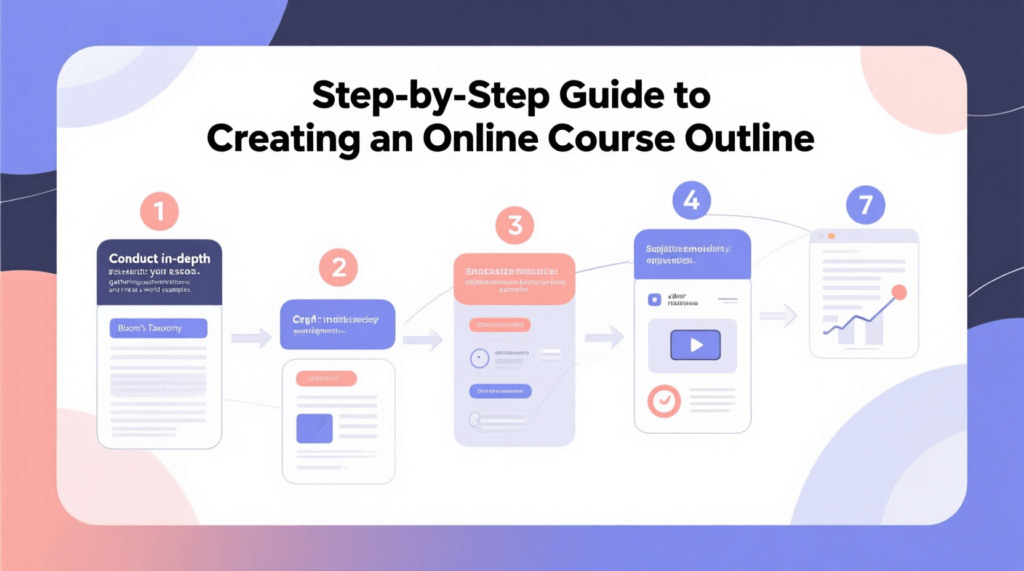
Step-by-Step Guide to Creating an Online Course Outline
A clear structure is key for both teachers and students. It helps you organize content, avoid repetition, and keep lessons focused. For students, it creates a smooth learning path and better engagement.
The process involves researching your topic, defining learning goals, breaking content into modules, and aligning lessons with outcomes. With a strong outline, you set the foundation for a course that is easy to follow and effective.
Step 1 – Research Your Topic Thoroughly
Start by gathering insights from books, case studies, and current industry trends. This helps you understand what learners expect and where demand is growing.
Review competitor courses to see how they structure content, what they cover, and where they fall short.
Spot knowledge gaps you can fill. Offering something unique or addressing overlooked areas makes your course more valuable and easier to market.
Step 2 – Set Clear Learning Goals
Define what students should achieve by the end of the course. Clear goals help learners understand the purpose of each lesson and what skills or knowledge they will gain.
Match your learning goals to the specific needs and expectations of your target audience. Aligning objectives with student priorities ensures the course is relevant and valuable.
Keep objectives measurable and realistic so that both you and your students can track progress effectively. Well-defined goals provide structure, motivation, and a clear roadmap for success.
Step 3 – Map Out the Course Structure
Break down your content into modules or individual lessons to make it manageable and easy to follow for students. A well-structured course enhances comprehension and engagement.
Arrange lessons in a logical sequence that builds knowledge progressively. Each section should naturally lead into the next, creating a coherent learning journey.
Estimate the time required for each section so students can plan their learning efficiently and stay motivated throughout the course.
Decide on clear learning outcomes for each module. Clearly defined objectives help students understand what they will achieve and allow you to measure success effectively.
Pick teaching styles that fit each topic. Some subjects may benefit from demonstrations, while others may require readings, discussions, or interactive activities to maximize understanding.
Get Your Course Ranked Today!
Make sure your course stands out in search results. Get more visibility, attract students, and increase enrollments with expert SEO strategies.

Step 4 – Develop the Core Lessons
Review any existing content you have and identify areas that need updating or expansion. Create new material where necessary to ensure that each lesson provides meaningful and relevant knowledge.
Choose essential topics that add the most value to your students. Focus on content that directly supports the learning objectives and contributes to achieving the outcomes defined for each module.
Read our blog on SEO Strategy for Course Creators at RankMyCourse and learn simple ways to grow your courses.
Step 5 – Add Extra Learning Resources
Select formats that enhance learning, such as PDFs, templates, slides, or quizzes. Choose resources that complement your lessons and reinforce key concepts.
Place them strategically within the course where they support understanding and retention. Proper placement ensures learners use them effectively.
Step 6 – Decide on Content Formats
Determine which content formats will best convey your material and keep students engaged. Video or lecture content is effective for explaining complex concepts and demonstrating techniques.
Include recommended readings to supplement learning and provide additional depth. These resources help students explore topics more thoroughly and reinforce key ideas.
Incorporate multimedia elements such as podcasts, infographics, and animations to make lessons more engaging and to appeal to different learning styles.
Read our blog on Content Marketing for Course Providers at RankMyCourse to learn simple ways to attract more students and grow your courses.
Step 7 – Plan Student Assessments
Include quizzes, projects, or exams in your course to provide structured ways for students to demonstrate understanding. These assessments help reinforce learning and keep students engaged throughout the course.
Use evaluations to measure learning outcomes and identify which concepts students have mastered and which areas may need additional clarification or support. This allows you to track progress effectively.
Adjust course content and teaching methods based on student feedback and assessment results. Regularly updating the course ensures it remains relevant, effective, and aligned with learner needs.
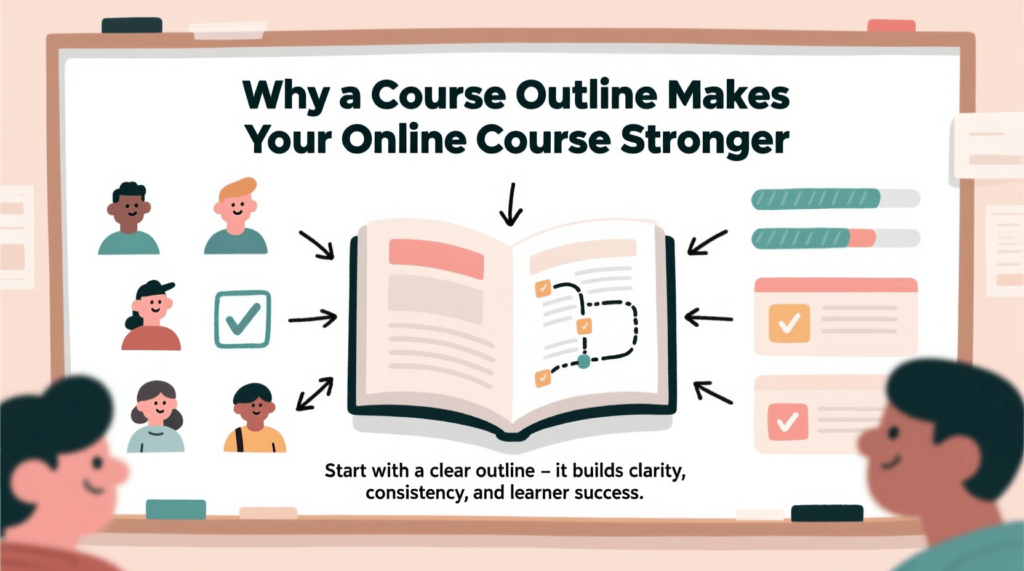
Why a Course Outline Makes Your Online Course Stronger
A well-structured course outline keeps instructors organized, providing a detailed roadmap for what to teach and when. Lessons follow a logical sequence, ensuring clarity and efficiency throughout the course.
Students stay on track with a clear outline, understanding exactly what to expect in each module or lesson. Following the progression helps learners plan their time and gain confidence in achieving course goals.
Structured content increases engagement and improves learning outcomes. Students are more likely to complete lessons, retain knowledge, and achieve the objectives set for each module, which enhances overall results.
A detailed course outline simplifies promotion and marketing efforts. Potential students can easily see the scope, benefits, and unique value of the course, which encourages higher enrollment rates.
Check out our blog on How to Market an Online Course at RankMyCourse to learn simple tips for reaching more students.
Best Practices for Writing a Course Outline
Creating a strong course outline is essential for delivering a structured and effective learning experience. A well-organized outline ensures that students can follow the material easily and achieve learning goals efficiently.
Focus on clarity, logical progression, and balance between modules and lessons. Each section should have defined objectives and include the necessary resources to support student learning.
Test your outline before launch to gather feedback and make improvements. Using the right tools and maintaining consistent formatting throughout helps streamline planning and enhances the overall quality of the course.
Stay Structured and Easy to Follow
Organize modules and lessons in a logical sequence to ensure students can progress smoothly without confusion. Use clear headings, subheadings, and consistent formatting to make content easy to read and navigate. Providing a structured path helps learners understand the flow and retain knowledge more effectively.
Test Your Outline Before Launching
Review the course outline from the perspective of a student to identify potential gaps or confusing sections. Conduct a small pilot test or share it with peers to gather feedback on clarity, pacing, and overall structure. Adjustments based on this feedback help ensure the course delivers a seamless learning experience.
Use Tools That Make Outlining Easier
Leverage software or platforms designed for course planning, such as Trello, Notion, or Google Docs. These tools help visualize the course structure, track progress, and allow for smooth collaboration during the planning and development phases. Using the right tools saves time and maintains consistency throughout the course creation process.
FAQs About Online Course Outlines
What’s the best way to write an online course outline?
Start by defining clear learning objectives for your course. Break content into modules and lessons, arrange them in a logical sequence, and include assessments and resources to support each section.
How can I refine and improve my outline while creating it?
Review your outline regularly and gather feedback from peers or pilot students. Adjust pacing, sequencing, and content based on observations to ensure clarity, engagement, and effective learning outcomes.
How do I keep my outline updated over time?
Regularly revisit your course outline to incorporate new information, trends, or feedback from learners. Updating content ensures the course remains relevant, accurate, and valuable for new students.