
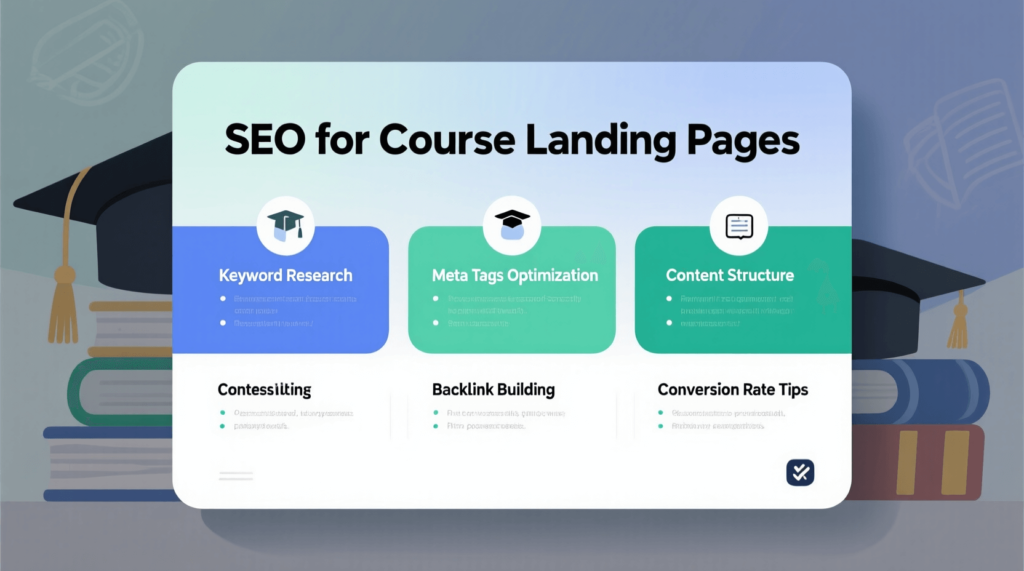
SEO best practices for course landing pages help attract the right students, improve search rankings, and increase enrollments. Combining keyword optimization, engaging content, fast load times, mobile responsiveness, and structured data enables course creators to enhance visibility, build trust, and guide learners toward enrollment. A well-optimized landing page turns search traffic into committed students.
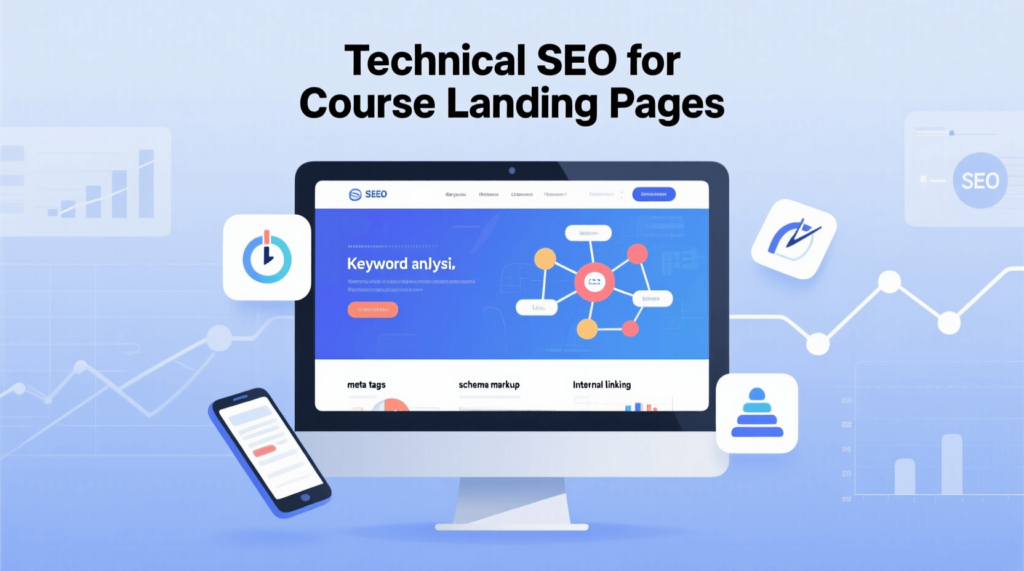
Technical SEO for Course Landing Pages
Technical SEO ensures landing pages are efficient, fast, and easy to access. Proper setup improves rankings, enhances user navigation, and supports higher engagement. Optimized pages help search engines understand content while providing smooth browsing for visitors.
Site Structure & URL Optimization
URLs must be clear and descriptive. Short addresses with meaningful terms improve comprehension and indexing.
Breadcrumbs guide users through page hierarchy. They clarify relationships between modules and main sections, improving navigation.
HTTPS is required for secure connections. Encrypted pages protect user information and increase search engine trust.
Page Speed & Performance
Page load times affect retention. Optimized images reduce size without affecting clarity.
Lazy loading delays off-screen material, improving initial responsiveness. This ensures core content appears immediately.
Core Web Vitals measure performance. Metrics such as load speed, visual stability, and interactivity identify areas for improvement.
Mobile Optimization
Responsive layouts adjust to screen size automatically. Text, buttons, and navigation must remain usable on all devices.
Mobile-first indexing prioritizes mobile versions for ranking. Ensuring functionality on phones and tablets is essential.
Accelerated Mobile Pages (AMP) reduce load time for mobile users. Streamlined versions of pages improve accessibility and interaction.
Schema & Structured Data
Structured data helps search engines interpret page content. Course schema highlights titles, descriptions, instructors, and duration.
FAQ schema presents questions with clear answers directly in search results. This increases visibility and relevance.
Review and rating schema displays feedback scores. Ratings improve credibility and can influence prospective student decisions.
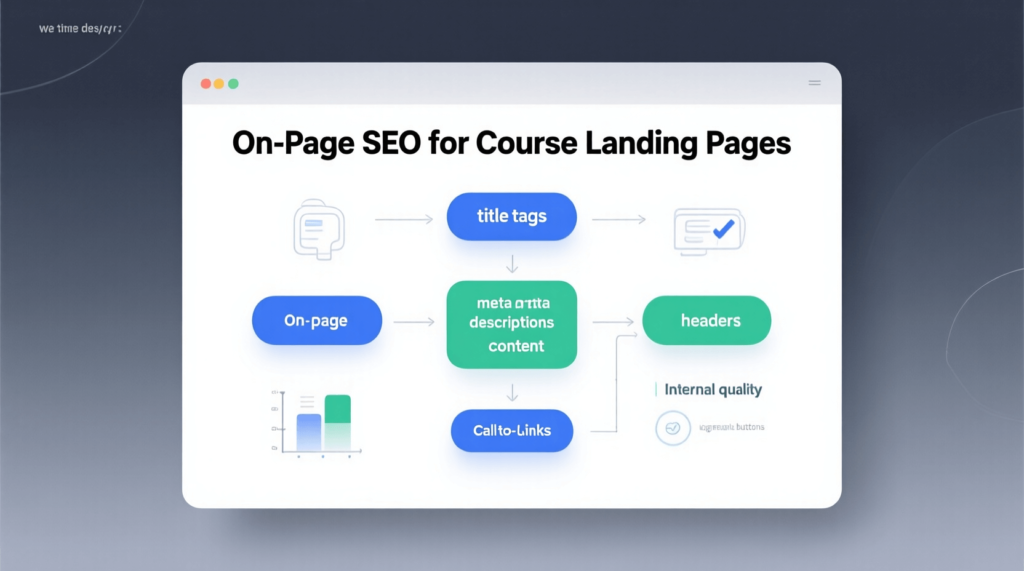
On-Page SEO for Course Landing Pages
On-page optimization ensures each course page communicates value to both students and search engines. Proper structure, content placement, and user signals improve visibility, engagement, and enrollment potential.
Content Optimization
Headings must be structured and descriptive. H1 identifies the main topic, while H2 and lower-level headings organize subtopics clearly.
Meta titles and descriptions summarize page content effectively. Accurate, concise text increases click-through rates in search results.
Keywords should appear naturally in titles, headings, and body content. Strategic placement highlights relevance without overwhelming the page.
Multimedia Optimization
Video previews and course demos improve comprehension and interaction. Descriptive filenames, captions, and transcripts increase discoverability.
Images require alt attributes that clearly describe content. Accurate tags support accessibility and indexing.
Interactive elements such as quizzes or module previews benefit from metadata and labeling that search engines can process.
Internal Linking
Links between course modules guide students through content logically. Clear connections enhance navigation and support indexing.
Blog-to-course links direct visitors from informational content to enrollment options. This reinforces authority while increasing traffic to landing pages.
Recommendations for related courses improve retention. Linking complementary offerings keeps learners engaged longer and encourages exploration.
User Experience Signals
Bounce rates indicate page relevance. Reducing abrupt exits requires engaging content, clear structure, and immediate value.
Scroll depth and interaction tracking provide insight into learner engagement. Monitoring behavior highlights which sections capture attention.
Call-to-action placement affects conversions. Prominent, context-aware CTAs encourage registration and guide students through the course journey.
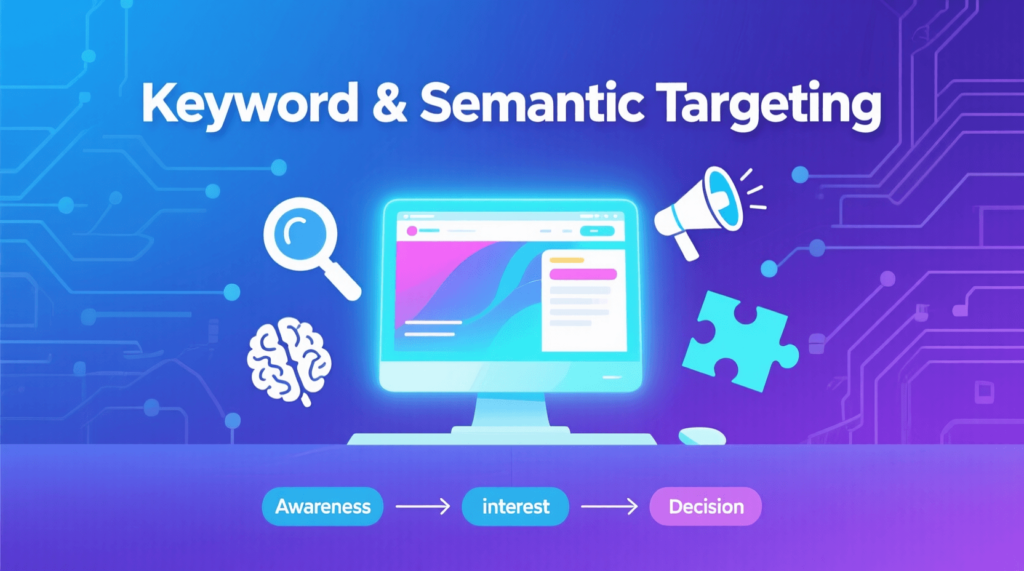
Keyword & Semantic Targeting for Course Landing Pages
Effective keyword and semantic targeting ensures course content reaches the right audience. Identifying relevant terms and matching intent improves visibility, relevance, and student engagement.
Primary Keyword Strategy
Short-tail course keywords highlight main subjects. They attract broad searches while establishing page relevance.
Long-tail keywords focus on specific learner goals. These precise terms capture higher-intent queries related to particular modules or outcomes.
High commercial intent phrases indicate readiness to enroll. Incorporating these terms in key sections supports conversion and engagement.
Search Intent Mapping
Informational intent includes learning guides and explanation-focused content. These pages attract students in research or exploration phases.
Transactional intent targets enrollment or signup opportunities. Keywords aligned with this intent increase registrations and conversions.
Navigational intent supports students searching for specific courses or platform features. Clear labeling and keyword alignment improve accessibility and usability.
Want more students to find your online course? Keywords are the key. You can learn more about how to choose the right keywords in our latest blog on keyword research for online courses.

Content Marketing Integration for Course Landing Pages
Integrating content marketing ensures courses attract attention, engage learners, and guide them toward enrollment. Coordinated messaging across pages and resources builds authority and trust.
Read our blog on How to Market an Online Course at RankMyCourse to learn simple strategies to reach more students.
Landing Page Copywriting
Course descriptions must be persuasive and concise. Highlight outcomes and key advantages that motivate engagement.
Headlines should emphasize benefits clearly. Each title communicates value and encourages readers to continue exploring.
Instructor information demonstrates expertise and credibility. Details about qualifications and experience reinforce confidence in the offering.
Landing Page Copywriting
Course descriptions must be persuasive and concise. Highlight outcomes and key advantages that motivate engagement.
Headlines should emphasize benefits clearly. Each title communicates value and encourages readers to continue exploring.
Instructor information demonstrates expertise and credibility. Details about qualifications and experience reinforce confidence in the offering.
Blog & Resource Support
Supporting articles direct traffic to landing pages. Content such as step-by-step guides and tutorials adds context and strengthens relevance.
Case studies and documented results illustrate effectiveness. Showcasing measurable outcomes builds trust and encourages commitment.
Social Proof & Reviews
Student testimonials provide authentic perspectives. Highlighted experiences validate course quality.
Ratings and endorsements contribute to credibility. Including positive scores or recognition increases likelihood of engagement.
Media mentions signal authority. Coverage in reputable outlets adds external validation and improves perceived value.
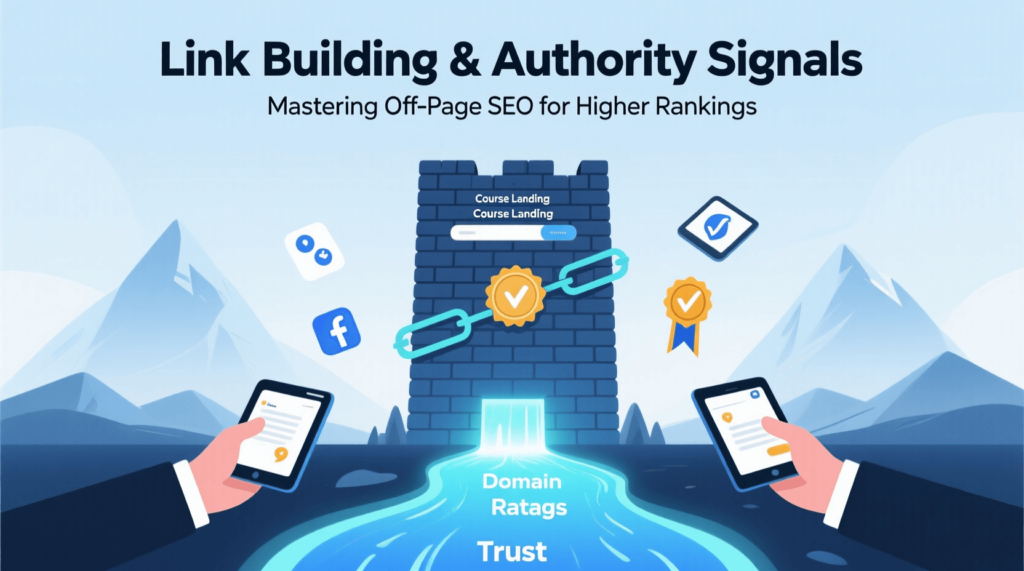
Link Building & Authority Signals for Course Landing Pages
Building authority strengthens visibility, credibility, and search rankings for course pages. External, internal, and social connections signal trustworthiness and relevance.
External Links
Education blogs and guest contributions provide valuable backlinks. References from trusted sources enhance authority and drive traffic.
Industry-specific directories list courses for niche audiences. Inclusion in relevant catalogs improves discovery and signals legitimacy.
Partnerships with related organizations generate backlinks. Collaborative links increase reach and reinforce credibility.
Internal Authority
Linking to high-value pages guides learners and distributes ranking potential. Strategic connections between modules improve navigation and indexing.
A hub-and-spoke content model organizes material around central topics. This structure reinforces relevance and strengthens overall site authority.
Social Signals
Sharing course landing pages on social platforms drives engagement and visibility. Increased interaction can indirectly support search rankings.
Video previews posted on social networks expand exposure. Highlighting key features encourages clicks and shares.
Influencer promotion amplifies reach. Endorsements from recognized figures increase trust and attract new audiences.
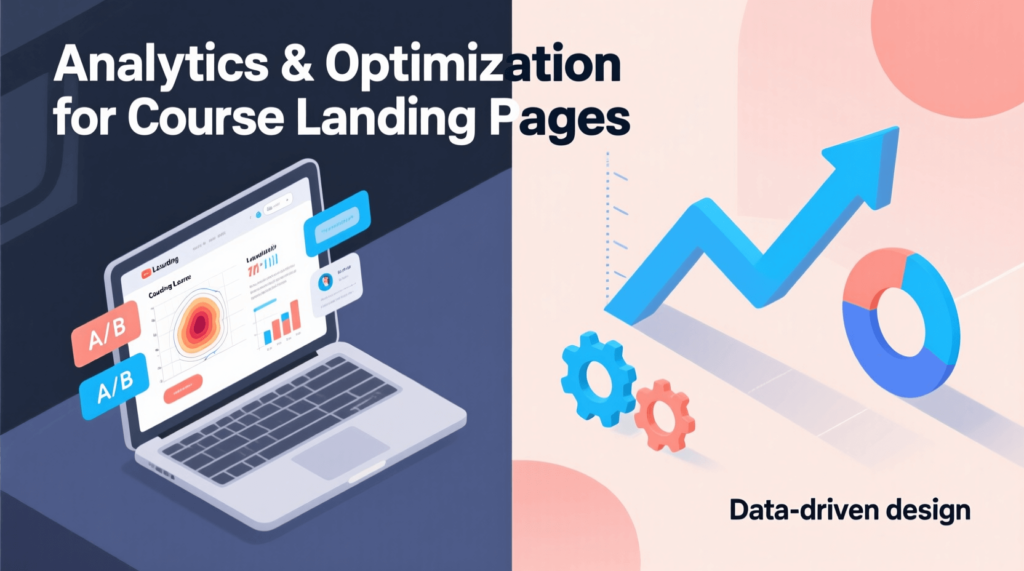
Analytics & Optimization for Course Landing Pages
Monitoring performance ensures course pages remain effective, visible, and conversion-oriented. Data-driven adjustments improve engagement and enrollment results.
Tracking Conversions
Google Analytics events track signups and interactions. Capturing these metrics reveals which actions drive enrollment.
Funnel analysis maps progression from landing pages to completed purchases. Identifying drop-off points highlights areas for improvement.
A/B Testing & CRO
Call-to-action testing determines which phrasing or placement generates the most clicks.
Landing page layout variations evaluate structure and visual flow. Changes reveal what keeps learners engaged.
Copy variation testing measures the effectiveness of headlines, descriptions, and module summaries. The best-performing text boosts conversion rates.
SEO Performance Metrics
Organic traffic monitoring assesses reach and engagement. Increases indicate content relevance and visibility.
Keyword ranking tracking shows which terms bring learners to pages. Adjustments improve positioning for target searches.
Backlink analysis identifies referring domains and link quality. Strong connections enhance authority and discoverability.
If you’re a course creator, having a solid SEO strategy is essential. In this blog, we’ll share tips on building an effective SEO strategy for course creators so your courses reach more students.
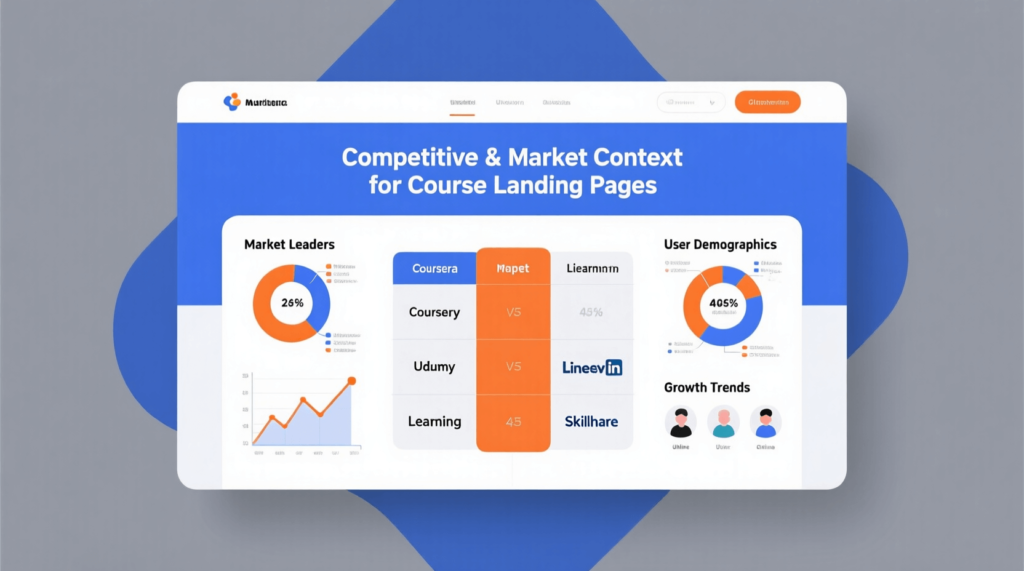
Competitive & Market Context for Course Landing Pages
Understanding competition and market trends ensures courses remain relevant, discoverable, and positioned for enrollment growth. Analysis informs strategy and highlights opportunities.
Competitor Analysis
Benchmark landing page SEO against similar courses. Identify strengths, weaknesses, and areas where your content can outperform others.
Gap analysis on keyword coverage reveals terms competitors rank for but your pages lack. Filling these gaps improves visibility and relevance.
Course Category Trends
Monitor popular topics in e-learning. Trending subjects attract broader interest and higher engagement potential.
Seasonal enrollment patterns indicate periods of increased demand. Aligning content and promotions with these trends improves conversion opportunities.
Platform Optimization
Recognize differences in SEO capabilities across platforms like Thinkific, One Education, Teachable, and Kajabi. Each system may affect indexing, metadata, and page structure.
Identify LMS-specific limitations that could hinder performance. Adjust content and settings to maximize visibility within platform constraints.