

SEO helps course creators get found online by bringing more visitors to their site, attracting the right students, building trust and authority, and growing enrollments. This guide explains a clear SEO strategy for course creators, with practical steps, tips, and strategies to improve visibility and reach more learners effectively.
1. Keyword Research for Online Courses
Effective keyword research is the backbone of online course visibility. Targeted terms help attract students actively seeking specific subjects. Without accurate targeting, course content may remain unnoticed. Focusing on relevant searches ensures higher traffic and engagement, resulting in increased enrollments and growth.

1.1 Fundamentals of Keyword Research for Course Creators
Selecting precise terms is essential for niche learning markets. Audiences vary depending on topic, level, and learning goals. Identifying terms with strong intent allows creators to reach users ready to take action, such as signing up or requesting more information.
High-intent terms indicate a readiness to engage or purchase. Examples include phrases for advanced certifications, specialized training, or paid programs. Targeting these can improve conversion rates significantly.
Low-intent terms signal curiosity or information gathering. These include general explanations, introductory concepts, or background information. While traffic may be high, converting visitors often requires structured follow-up.
Balancing high- and low-intent terms supports both immediate action and long-term authority. This ensures visibility across different stages of the learning journey.
1.2 Tools & Techniques
Various tools assist in uncovering valuable search terms. Google Keyword Planner identifies trends and volume, providing a starting point for strategy. Entering general topics generates related suggestions aligned with user searches.
SEMrush and Ahrefs offer competitor insights. Reviewing terms other courses rank for helps locate gaps and potential opportunities. This approach highlights which subjects are performing well and where content could differentiate.
Long-tail terms provide specificity and lower competition. Phrases like “beginner data analysis with Python” attract users seeking focused guidance. These terms often yield higher engagement because they match precise needs.
Combining multiple tools ensures data accuracy and uncovers opportunities not apparent from simple searches. It also enables targeting less competitive terms that still drive meaningful traffic.
1.3 Content Mapping
Keywords must align with learning pathways. Mapping terms to course stages organizes material effectively. Awareness-stage terms attract those unfamiliar with the subject. Consideration-stage terms guide users evaluating options. Action-stage terms reach those ready to enroll.
Grouping terms by modules and lessons streamlines content creation. For instance, programming courses can separate introductory, intermediate, and advanced lessons, each with dedicated terms. Linking related lessons improves navigation and maintains topic cohesion.
Strategic mapping also enhances internal linking. By connecting lessons naturally, SEO benefits increase while students follow a logical learning sequence.
Find the best keywords for your online courses! Check out our blog for easy tips on keyword research for course creators.
1.4 Special Considerations
Seasonality affects searches. Certain subjects spike during specific periods, like exam preparation or holiday learning. Monitoring trends allows content timing for maximum visibility.
Understanding search intent is critical. Informational queries focus on knowledge, comparison queries focus on options, and transactional queries indicate readiness to act. Tailoring material to match these intents improves engagement and enrollment likelihood.
Regional variations impact phrasing and terminology. Some audiences use localized expressions or follow distinct educational standards. Accounting for these ensures content resonates across multiple locations and avoids missing potential learners.
Other factors include emerging trends and platform-specific behavior. Students may use different terms on search engines, social media, or learning platforms. Tracking these shifts helps maintain relevance over time.

2. SEO for Course Landing Pages
Optimizing landing pages is crucial for converting visitors into students. A well-structured page improves search visibility and enhances engagement. Every element, from headlines to technical performance, contributes to search rankings and user experience.
2.1 Landing Page Architecture
The headline must immediately convey the course topic while including relevant search terms. Subheadings should reinforce the main theme and provide additional context for both users and search engines.
Copy should emphasize advantages. Focus on outcomes and value, explaining why the course matters. Clear, concise language ensures readers understand benefits quickly while supporting keyword integration naturally.
Logical structure is essential. Divide sections for features, modules, testimonials, and enrollment steps. Organized layout helps both visitors and search engines navigate the content efficiently.
2.2 Content Optimization
Target terms should appear organically in text, headings, and meta descriptions. Avoid keyword stuffing while maintaining relevance to the subject. Quality content improves rankings and user engagement simultaneously.
Visual elements strengthen comprehension. Images and videos should include descriptive alt text containing relevant terms. Multimedia makes content more engaging, improves dwell time, and supports accessibility.
Supporting content, such as FAQs or module previews, adds value while providing additional keyword opportunities. This enhances both SEO and the perceived authority of the page.
Read more about SEO for course landing pages in our latest blog to learn how to optimize your content, use the right keywords, and attract more students.
Get Your Course Ranked Today!
Make sure your course stands out in search results. Get more visibility, attract students, and increase enrollments with expert SEO strategies.

2.3 Conversion Optimization & SEO
Strategically placed call-to-action buttons guide visitors toward enrollment. Text and placement must be clear, visible, and persuasive without interrupting flow.
Reducing bounce rates supports SEO performance. Streamlined navigation, readable layouts, and logical progression keep users engaged. Internal links to related lessons or resources encourage deeper exploration.
Page copy should balance informative content with actionable prompts, guiding visitors through the enrollment decision efficiently.
2.4 Technical Elements
Page speed directly affects rankings and user satisfaction. Optimize images, scripts, and hosting to ensure fast loading.
Mobile-first design is essential, as many learners access content on phones or tablets. Responsive layouts and scalable elements provide a smooth experience across devices.
Other technical considerations include secure connections, structured data, and crawlable navigation. Proper implementation improves search indexing and enhances the overall credibility of the course page
3. Technical SEO for Course Platforms
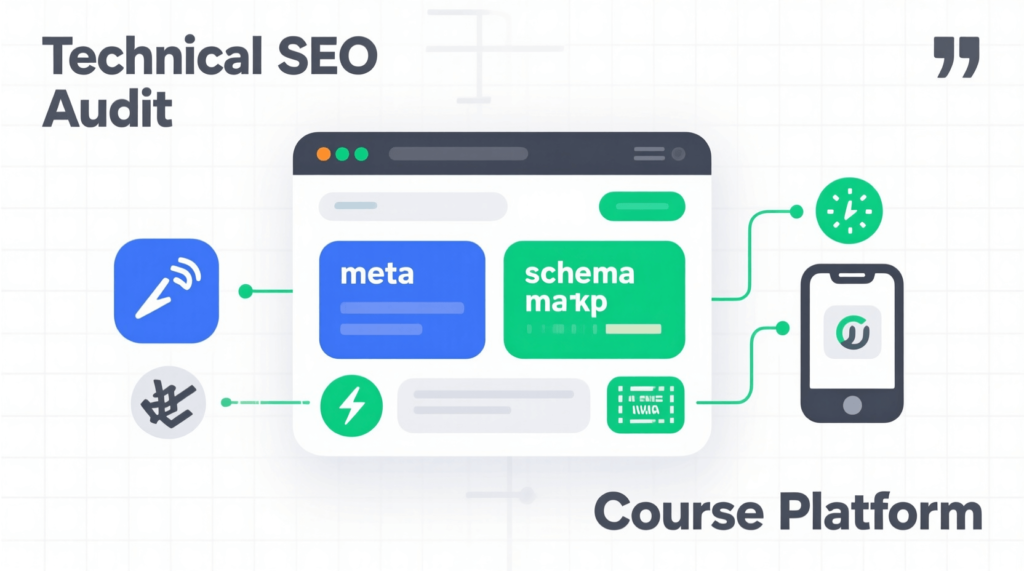
Technical SEO ensures course websites function efficiently and are easily found by search engines. Optimized platforms improve visibility, enhance user experience, and increase engagement. Without proper configuration, even strong content may not reach its audience.
3.1 Site Structure & Navigation
A clear hierarchy for course categories helps both users and search engines understand content relationships. Grouping courses by topic, level, or format creates logical paths for navigation.
URL structure should be simple and descriptive. Use readable, keyword-relevant paths like /python-for-beginners instead of complex strings. This supports indexing and improves click-through rates.
Consistent menus and internal linking allow visitors to move seamlessly between related courses or lessons, reducing drop-offs and increasing time on site.
Check out our full blog on Technical SEO for Course Platforms at RankMyCourse. Learn how to make your course site faster, secure, and easy to use, so students can find and enjoy your courses. Read it now for simple, practical tips.
3.2 Indexability
XML sitemaps guide search engines through all course pages, ensuring no content is missed. Every lesson, module, and category should be included in the sitemap.
Robots.txt files control which pages are crawlable. Correct configuration prevents indexing of irrelevant pages while allowing essential course content to appear in search results.
Regular checks for crawl errors and broken links maintain visibility and prevent content from being overlooked by search engines.
3.3 Core Web Vitals
Performance metrics influence search rankings and user satisfaction. Largest Contentful Paint (LCP) measures how quickly main content loads. Optimizing images, reducing server response times, and minimizing scripts can improve LCP.
Cumulative Layout Shift (CLS) measures visual stability. Unstable layouts can frustrate users. Fixing unexpected shifts in images, fonts, or ads creates a smoother experience.
Fast-loading, stable pages keep visitors engaged and support better search performance.
3.4 Platform-Specific SEO
Different course platforms require tailored optimization. WordPress LMS solutions benefit from structured data, custom permalinks, and plugin-based SEO enhancements.
Thinkific and Teachable allow metadata editing, keyword customization, and URL management. Adjusting these settings ensures course pages are discoverable and ranked effectively.
Platform-specific configuration also improves navigation, indexing, and performance metrics, contributing to overall SEO success.
3.5 Security & Accessibility
Secure connections using HTTPS protect user information and improve trust signals. Search engines prefer encrypted websites.
Accessibility features, including alt text, readable fonts, and clear labeling, expand reach to learners with diverse needs. Inclusive design supports engagement and compliance with standards.
4. Voice Search Optimization for Courses
Voice search is changing how students locate courses. Queries are now more natural and conversational, influenced by smart assistants and connected devices. Optimizing for voice improves visibility, engagement, and accessibility for learners using modern search methods.
Read our detailed blog on Voice Search Optimization for Courses at RankMyCourse. Learn how to make your courses easy to find using voice search, so more students can discover and enroll. Check it out now for simple, practical tips.
4.1 Voice Search Trends
Students increasingly rely on voice commands to find educational options. Searches are often phrased as questions or statements, like “Python courses for beginners near me” or “best marketing certification online.”
Smart devices, including smartphones, smart speakers, and AI assistants, influence query style. The trend emphasizes short, precise, and context-aware answers. Courses not optimized for voice may miss these high-intent, ready-to-act users.
4.2 Content Adaptation
Content must reflect natural language patterns. Target conversational terms rather than formal or stiff phrases. Students tend to ask questions directly, so incorporating these patterns increases relevance.
Implementing FAQ schema enhances voice visibility. Structuring content around common questions ensures smart assistants can pull clear, concise answers for users. Clear headings, bullet points, and direct responses improve recognition by voice platforms.
4.3 Local Voice Search
Location-based queries are common for in-person or hybrid workshops. Students often add “near me” or city-specific terms to find options quickly.
Geo-tagging course locations and including local identifiers helps search engines return accurate results. Address, city, and regional details improve relevance for nearby learners and boost discoverability for local offerings.
4.4 Technical Setup
Structured data is essential for question-driven content. Schema markup allows search engines to understand context, categorize topics, and highlight answers in voice search results.
Using proper schema for lessons, modules, and FAQ sections ensures queries return precise answers. Regularly testing structured data ensures compatibility with search engine updates and voice platforms.

5. SEO Tools for Course Creators
Effective SEO requires the right set of tools. These tools simplify research, analysis, and optimization. They provide insights into performance, ranking, and audience behavior, helping course creators make informed decisions.
Check out our detailed blog on Top SEO Tools for Course Creators at RankMyCourse. Learn which tools can help you improve course visibility, reach more students, and optimize your content easily. Read it now for practical tips.
5.1 Keyword Tools
Keyword tools identify high-value terms and search trends. Ahrefs and SEMrush provide data on volume, difficulty, and competitor performance. Ubersuggest offers additional keyword suggestions and insights for targeting specific topics. Using these tools ensures content aligns with what students actively search for.
5.2 Technical Auditing Tools
Technical audits identify site issues that can impact search performance. Screaming Frog and Sitebulb scan websites for broken links, duplicate content, crawl errors, and other SEO concerns. Regular audits maintain site health, ensuring courses remain accessible and indexable by search engines.
5.3 Rank Tracking
Rank tracking tools monitor keyword performance over time. AccuRanker and ProRankTracker provide updates on search positions and visibility trends. Tracking rankings helps identify which strategies work and which areas need improvement, enabling timely adjustments for better results.
5.4 Content Optimization Tools
Content optimization tools improve relevance and readability. Surfer SEO and Clearscope analyze content against top-performing pages, suggesting keyword placement, density, and semantic relevance. Optimized content increases chances of ranking higher and engaging learners effectively.
5.5 Analytics & Reporting
Analytics tools track traffic, user behavior, and performance metrics. Google Analytics provides data on visitors, engagement, and conversions. Google Search Console identifies indexing issues, search queries, and click-through rates. Combining both tools offers a clear view of SEO impact and course performance.
6. SEM vs SEO for Course Sales
Understanding the differences between SEM and SEO helps course creators choose the right approach for visibility and enrollment. Both strategies have distinct benefits and can complement each other when applied correctly.
6.1 Defining SEM and SEO
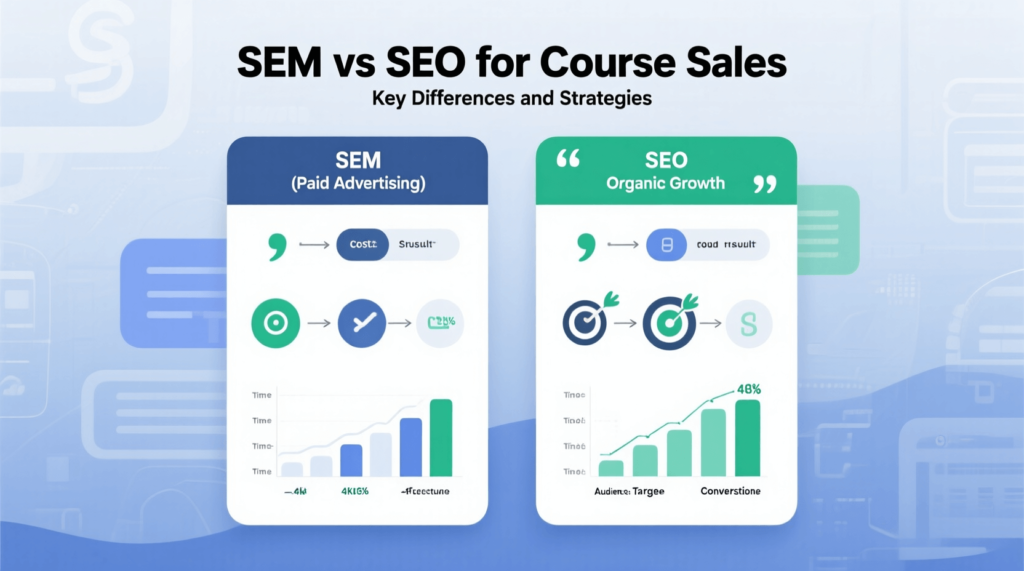
Search Engine Marketing (SEM) involves paid campaigns to appear in search results immediately. Search Engine Optimization (SEO) focuses on organic methods to improve rankings over time.
SEM provides faster results but requires ongoing investment. SEO requires patience but delivers sustained traffic and long-term authority without direct payment per click. Cost and longevity distinguish the two approaches, guiding strategy depending on course goals and timelines.
Read our blog on SEM vs SEO for Course Sales at RankMyCourse and learn which strategy works best to get more students.
6.2 Paid Search Advantages
SEM offers instant exposure, especially useful for new course launches. Campaigns can target specific keywords, locations, and demographics to reach high-intent learners.
Competitor keyword targeting allows courses to appear alongside similar offerings, increasing visibility for audiences actively comparing options. Paid campaigns provide measurable results, enabling quick adjustments for better performance.
Get Your Course Ranked Today!
Make sure your course stands out in search results. Get more visibility, attract students, and increase enrollments with expert SEO strategies.
6.3 SEO Advantages
SEO builds organic visibility that continues to attract learners over time. Evergreen courses benefit most because consistent rankings reduce reliance on paid campaigns.
Organic search results foster credibility and trust. Students often perceive high-ranking content as authoritative, increasing likelihood of enrollment. Optimized pages, quality content, and backlinks reinforce course reputation.
6.4 Combining SEM & SEO
A hybrid approach maximizes results. Paid campaigns can support seasonal promotions, events, or short-term launches while SEO maintains baseline traffic.
Using both strategies ensures immediate visibility without sacrificing long-term growth. Coordinated planning allows course creators to reach learners at multiple stages of the decision-making process efficiently.
7. On-Page SEO Tips for Course Pages
Optimizing course pages ensures search engines understand content while improving student experience. Proper structure, descriptive elements, and accessible media increase visibility, engagement, and navigation efficiency.
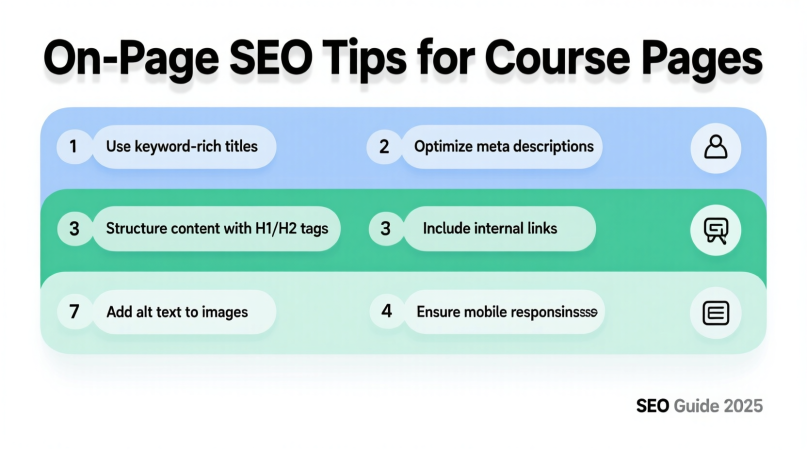
Read our blog on On-Page SEO Tips for Course Pages at RankMyCourse to learn how to improve visibility and attract more students.
7.1 Title Tags & Meta Descriptions
Title tags must be clear, concise, and relevant to the topic. Incorporate specific course subjects, levels, or outcomes to target intended learners. Strong titles attract clicks and signal content relevance to search engines.
Meta descriptions summarize content in 150–160 characters. Use language that highlights benefits, outcomes, or unique aspects of the course. Well-written descriptions improve click-through rates and provide context for users scanning search results.
7.2 Header Tag Optimization
Headers organize content for readability and search engine understanding. H1 tags should focus on the main course topic. H2 and H3 tags divide lessons, modules, or sections, allowing students to scan easily.
Logical hierarchy enhances usability and supports SEO by emphasizing key topics. Each header should include relevant terms without repetition, guiding both learners and algorithms through content.
7.3 Internal Linking
Linking between lessons, modules, and resources improves navigation. Students can move smoothly between related topics, reinforcing learning and engagement.
Internal links also help search engines understand content structure. Pointing to key lessons or related courses establishes hierarchy and relevance. Maintain descriptive anchor text to clarify destination pages.
7.4 Multimedia Optimization
Video transcripts make course content accessible and searchable. Search engines can index spoken content, improving organic reach. Transcripts also support students who prefer reading or need reference material.
Alt attributes for images ensure accessibility and enhance SEO. Describe the visual accurately using relevant terms. Properly labeled media increases chances of appearing in search results while supporting diverse learning needs.

8. Local SEO for Online Educators
Local SEO connects educational offerings with nearby learners. Optimizing location-specific elements increases visibility for searches conducted within a defined area and drives enrollment from students seeking convenient options.
8.1 Local Profiles
Creating and maintaining accurate local profiles enhances search results. Setting up a Google Business Profile ensures essential information appears in map listings and search snippets.
Listing courses on platforms like Yelp improves credibility and expands awareness. Complete profiles with contact details, schedules, and descriptions maximize impact for location-based searches.
8.2 Geo-Targeted Keywords
Including region-specific phrases in content aligns with how users search. Terms such as “[Course type] near me” or city-specific queries attract individuals seeking accessible learning opportunities.
Consistent usage across landing pages, blog posts, and meta descriptions reinforces relevance and helps search engines associate offerings with local intent.
8.3 Local Backlinks
Collaborating with nearby organizations strengthens authority and visibility. Partnerships with community centers, libraries, or educational hubs generate backlinks from trusted sources within the same area.
These connections increase referral traffic while signaling to search engines that the course is relevant for a specific location.
8.4 Reviews & Reputation Management
Collecting reviews from students enhances credibility and encourages prospective learners. Google reviews, in particular, influence ranking in local search results.
Responding to feedback demonstrates attentiveness and professionalism. Positive reviews increase trust while addressing concerns promptly maintains reputation.
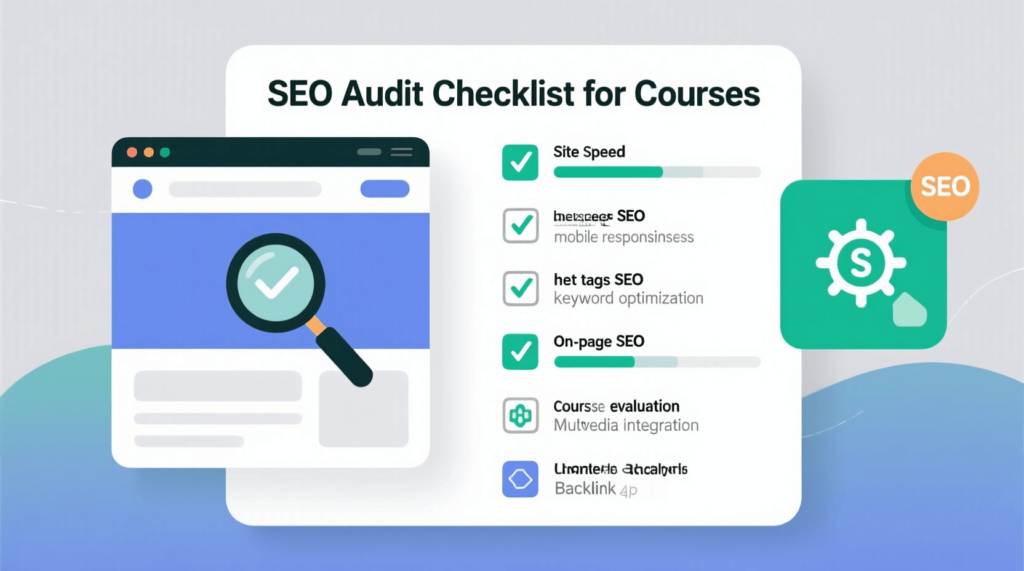
9. SEO Audit Checklist for Courses
An SEO audit evaluates a course site’s effectiveness and identifies opportunities for improvement. Regular assessment ensures high visibility, smooth navigation, and alignment with search engine expectations.
9.1 Technical Checks
Mobile usability affects accessibility and engagement. Pages must display correctly across devices, including smartphones and tablets.
Site speed directly influences retention. Optimizing images, scripts, and server response times reduces loading delays.
Broken links disrupt navigation and harm authority. Regular link audits prevent errors and maintain seamless learner experiences.
9.2 On-Page SEO Audit
Keyword coverage ensures each page targets relevant search terms. Alignment with course topics increases visibility for learners searching for specific subjects.
Meta tags, including titles and descriptions, must be complete and unique. Properly formatted tags improve click-through rates and indexing.
9.3 Off-Page SEO Audit
Backlink profile health indicates trustworthiness and influence. Reviewing referring domains, anchor text distribution, and link quality identifies strengths and gaps.
Eliminating harmful or irrelevant links preserves authority and reduces potential penalties from search engines.
9.4 Content Audit
Thin content provides minimal value. Removing or consolidating underperforming pages strengthens overall site quality.
Updating outdated lessons maintains relevance. Reflecting current information and trends improves learner satisfaction and search visibility.
9.5 Reporting
Tracking progress with KPIs monitors improvement and highlights areas needing attention. Metrics include organic traffic, keyword rankings, backlinks, and engagement indicators.
Clear reporting allows structured decision-making and continuous optimization.